
The power of water: building a future-proof Blue Economy
Water makes life possible and is essential for food, climate, energy and the economy. Yet we often treat our oceans as inexhaustible, even though pressures are mounting: 11 million tonnes of plastic end up in the sea every year and more than a third of fish species are overfished. Fortunately, more and more pioneers are showing that water and the economy can be balanced. The DOEN Foundation is committed to a regenerative Blue Economy, which does not deplete but restores.
What is a regenerative Blue Economy?
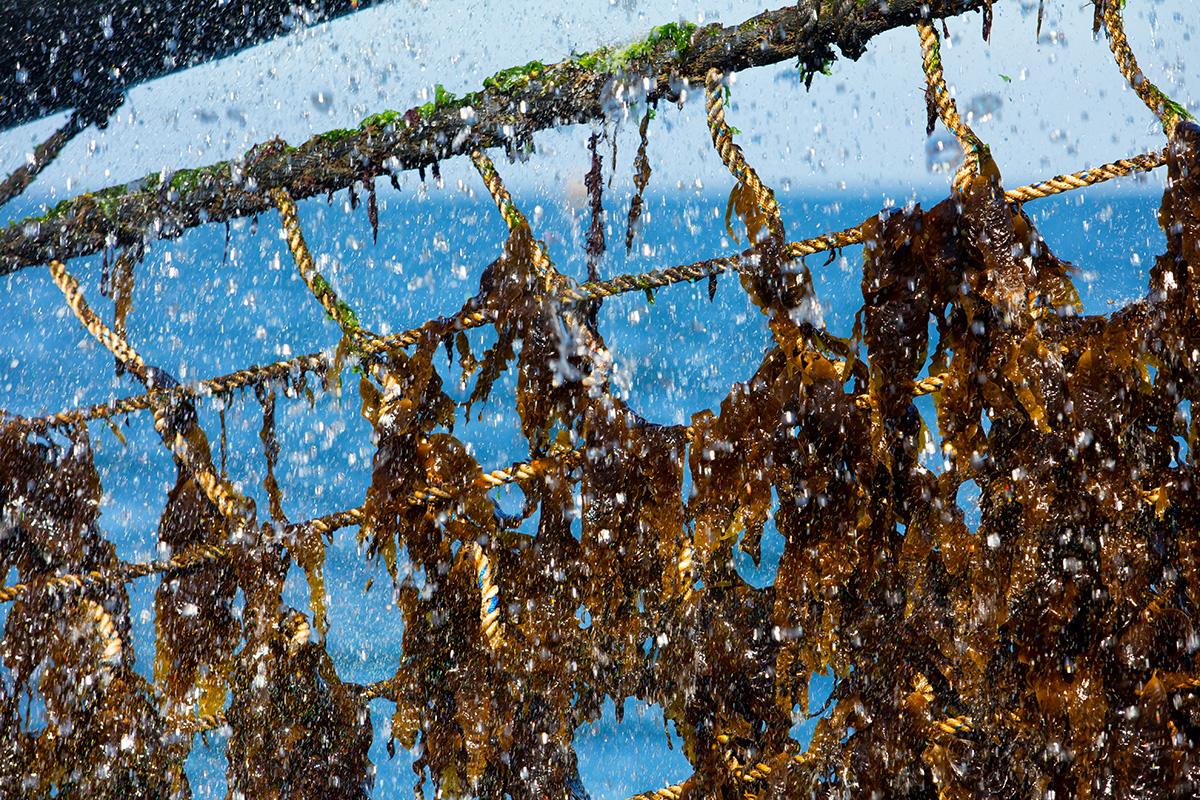
The regenerative Blue Economy is about restoring oceans, rivers and coastlines. Entrepreneurs use what the ocean has to offer and at the same time contribute to restoring nature and biodiversity. This is done through such things as seaweed farms, oyster and mussel farms, coastline protection and coral reef, mangrove or seagrass conservation. New materials are also being developed from algae and seaweed, such as bioplastics, natural textile dyes or natural fertilisers for plants, as alternatives to polluting raw materials. In this way, the sea not only provides economic value, but also becomes stronger and healthier.
Why now?
Climate change, harmful economic activities and pollution are throwing the ocean out of balance. The water is becoming more acidic and is rising in temperature; coral reefs are disappearing and biodiversity is declining. At the same time, much of the world’s population depends on the sea for food and income. Noortje van Heijst, Impact Investment Manager at DOEN Ventures: “For a long time, we mainly looked at land-based solutions. Yet the ocean plays a huge role in climate, food and life. Without a healthy ocean, there is no healthy planet. Because the oceans belong to no one, not many people feel responsible. As a result, recovery often lags behind. This is precisely why investment and co-operation are especially important.”
What is DOEN doing?
The regenerative Blue Economy is a relatively young sector with plenty of room for innovation and positive impact. For many innovative projects, it is difficult to find funding. It is precisely in this early phase that DOEN can make a difference and help to kick-start this development. We offer flexible funding and dare to take risks. Through the DOEN Foundation, we support early-stage impact entrepreneurs and organisations that are helping to develop the sector and the network in Europe, East Africa and the CAS-BES islands (Curaçao, Aruba, Sint Maarten, Bonaire, Sint Eustatius and Saba). We invest in impact entrepreneurs in Northwest Europe through DOEN Ventures.
Opportunities for restoration and income
Marine restoration can go hand in hand with economic opportunities for local communities. Maaike Broekhuis, DOEN Foundation programme manager: “We can combine nature restoration with income. For example, seaweed farms enhance biodiversity and provide employment at the same time. And oyster farms not only produce food but also purify seawater, store CO2 and form natural reefs. Solutions like these help people and nature at the same time.”
Learning what works
One of the challenges is that there are still insufficient data available on what works and what doesn’t. Maaike: “We use our network to bring people together in order to seize opportunities and co-ordinate our work. We also conduct deep dives in specific sectors, such as seaweed and coastal conservation. This is how we are building a stronger ecosystem step by step.” Thanks to sharing knowledge and working together, the sector is growing faster and with a clearer focus.
Tips from Maaike and Noortje
1. Watch the documentary Ocean with David Attenborough or The Wild North Sea
Noortje: “These beautiful documentaries show the key role that the sea plays in climate change and the viability of coastal areas. You can watch them on Disney+ and NPO Start.”
2. Choose products made from seaweed
Noortje: “Seaweed restores biodiversity, stores CO2 and can be used in many different ways. For example, you can use it as an ingredient in your meals, you can buy a nice woollen hat dyed with seaweed dye or choose packaging made of seaweed instead of plastic.”
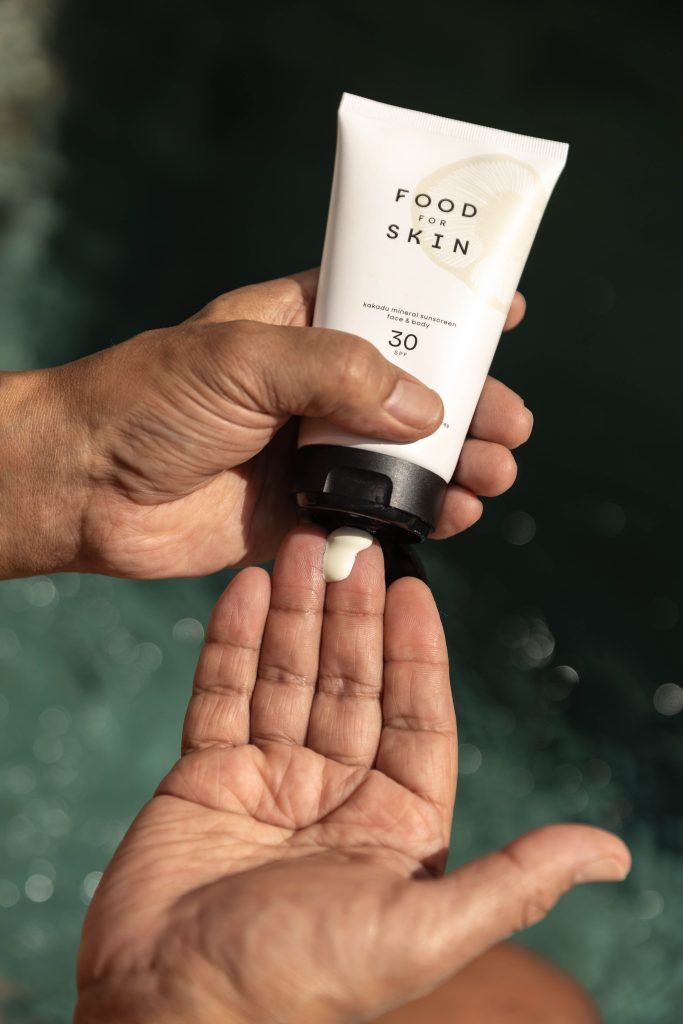
3. Use sunscreen from Food for Skin
Maaike: “Ask yourself what materials and ingredients you use and how they arrived in your home? Be a bit more aware of what you eat, but also what kind of sunscreen you put on your skin before you go swimming in the sea. Food for Skin sunscreen is ocean friendly.”
Towards a new balance
The Blue Economy is gradually growing into a sector that centres on recovery, co-operation and future-proofing. A sector where entrepreneurs work with nature and leave ecosystems stronger than they were. Thanks to more funding for solutions, more involvement of coastal communities and more public awareness, real change is taking place.
The UN Ocean Decade (2021–2030) shows that this movement has already begun. People around the world are working together to create a clean, healthy and resilient ocean. That gives hope for the sea, for the people who live from it and for the future of our planet.