
United Repair Centre: repairing as a considered choice in a world of overconsumption
Black Friday. Black Friday is the day of massive discounts, huge bargains, impulse buys, and overflowing shopping carts, both physically and online. We get a lot for a little. But do we really need all those new products? An alternative version of Black Friday – Green Friday – has been gaining ground in recent years. Supporters of the green version of Black Friday have been calling on consumers and businesses to reflect on the impact of their buying behaviour. And that is much needed at a time when the ecological and social consequences of overconsumption are becoming increasingly visible.
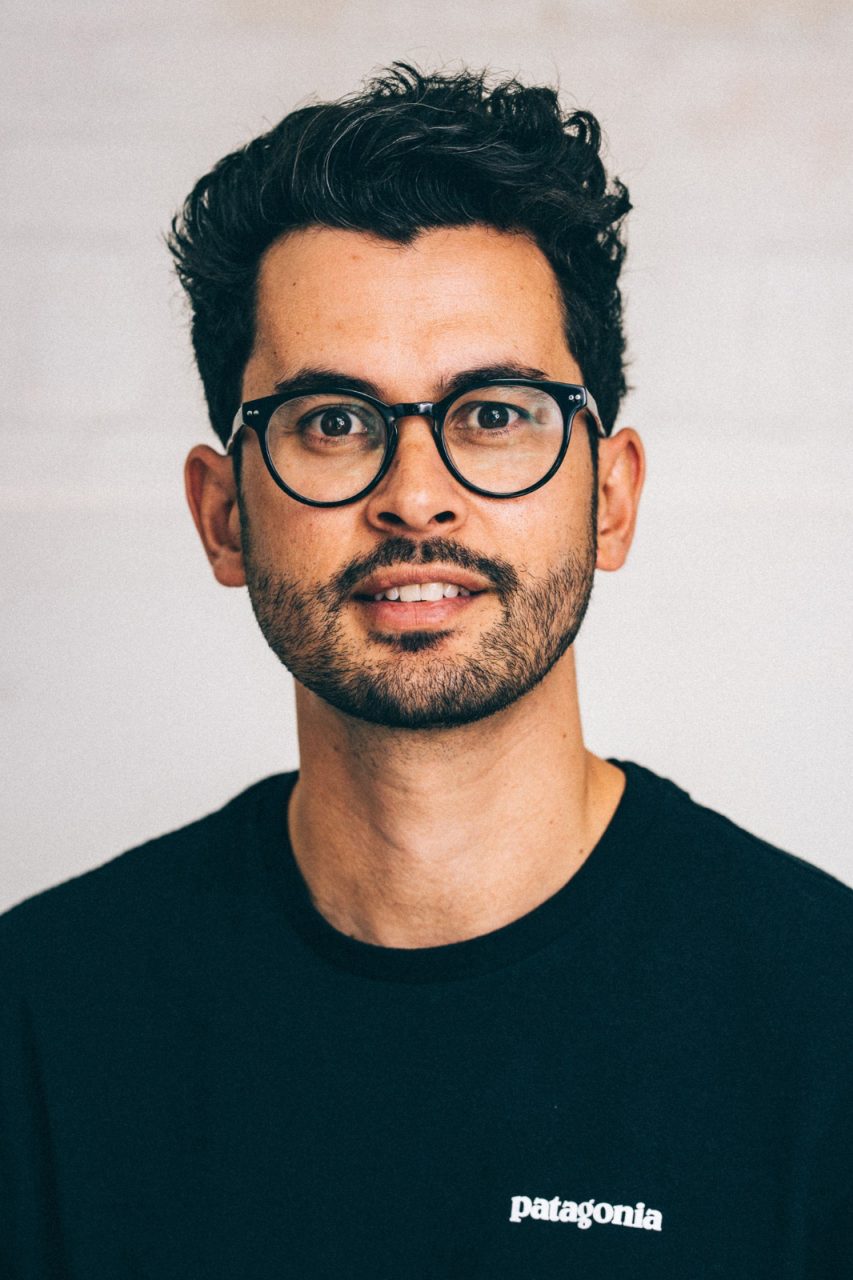
United Repair Centre, one of DOEN Ventures’ partners, also wants to reduce the impact of our purchasing behaviour. As far as they are concerned, it’s not just Green Friday but every day of the week that’s about repairing, reusing and extending the life of clothing. This sends an important message. As a sustainable alternative, repair shows that fashion can be done differently. DOEN Ventures spoke to Thami Schweichler, co-founder of the B2B repair company United Repair Centre.
How does United Repair Centre contribute to an economy that is not only about growth, but also about caring for people and planet?
It’s hard to imagine, but every second, a truckload of clothing ends up in a landfill or is incinerated. It’s unfortunately the reality of today’s industry. “Our industry has normalised waste on an unimaginable scale. Far more is produced than people can buy, wear, or even want. Clothing is treated as disposable, even though it absolutely isn’t.”
To do something about this and make repair a really scalable solution, the social enterprise Makers Unite opened the United Repair Centre in 2022 in collaboration with the clothing brand Patagonia and the Amsterdam Economic Board. “We make clothes last longer, reduce textile waste and help brands and people to take action.”

Do you have some facts and figures to back that up?
To date, 75,000 garments have been repaired and thousands saved from the landfill. “By moving to a former school building in Amsterdam-West in mid-2023, we can now carry out many more clothing repairs annually. This is an important step towards our goal of reaching 300,000 clothing repairs per year by 2028 and becoming the largest clothing repairer in Europe.” In total, over 397,500 kg of CO₂ emissions have now been saved by giving clothing a second life. “Repair is a major step towards circularity. We think this should become the norm if we want to care for people and planet. Then everyone wins.”
What is the biggest challenge in making your business scalable?
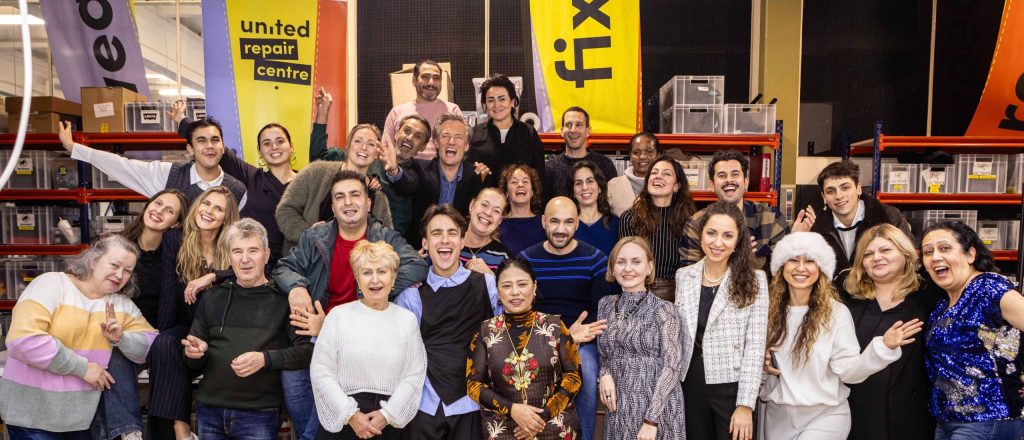
“The biggest challenge is the transition from the linear clothing supply chain – which has been built up over the last 100 years – to a circular one. We have to provide a very good service if repairing clothes is to become more attractive to the mass market than buying clothes produced at low cost in the Far East. In Europe, there are currently very few centres that offer clothing repair on a large scale. This presents a significant opportunity for us. Our 70 employees are working daily to make the supply chain more circular.” United Repair Centre’s technology is crucial to scaling up their impact. “Without our platform, logistics links, QC tools, and data systems, we would never be able to grow from a local initiative to a European solution. This element is very important for our next phase.”
How do fashion brands respond to your service?
“The fashion brands are responding very enthusiastically now, but when we started the United Repair Centre three years ago, it was a different matter. At the time, we really had to explain why it was important and what costs were involved. And brands thought long and hard about a partnership. Now, three years later, we work with 32 fashion brands, including Patagonia, North Face, Decathlon, Lululemon, Rapha and Levi’s. In the meantime, the way consumers, and thus the fashion brands, feel about us has really changed. This is partly due to new legislation that ensures that fashion brands themselves have to bear an increasing responsibility for textiles, making our solution more attractive to them. Customers of the affiliated clothing brands can have their items repaired easily and with high quality by registering them through the clothing brand and sending them in. This makes repair and reuse part of the brands’ business models. Consumers are increasingly asking for these kinds of solutions, which is why brands are now coming to us for partnerships.”

The mission goes beyond giving clothing a second life. How important is the Academy for the social impact and success of an inclusive clothing industry?
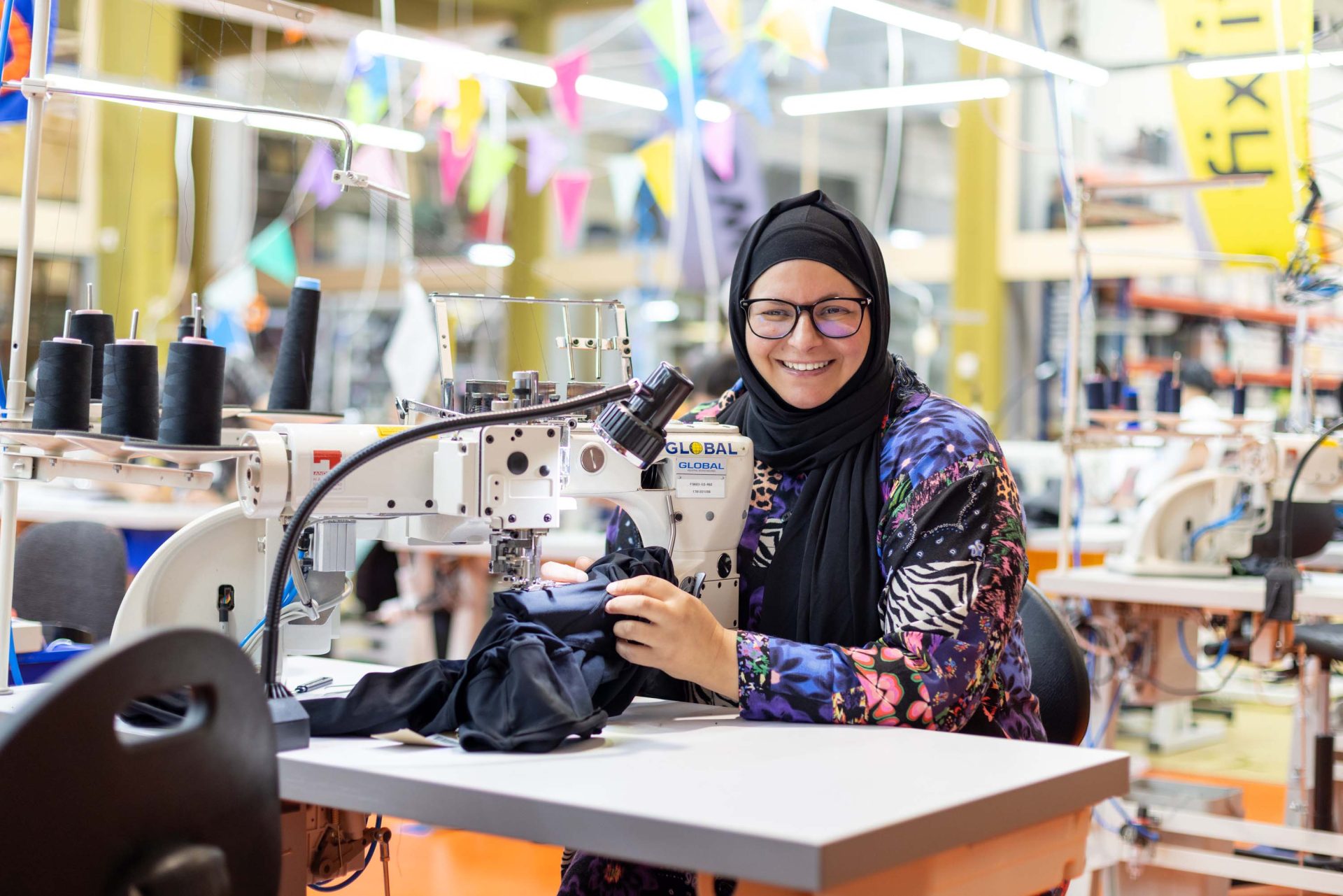
With the United Repair Academy, the United Repair Centre trains people to become certified and skilled tailors, with a focus on repair and sustainability. “In this way, we create jobs for people who have difficulty accessing the labour market, such as newcomers and young people. The training, which lasts six months to a year, is modular, free of charge, and includes coaching in language skills and personal development. After training is completed, we offer the graduates a paid position at the United Repair Centre.”
“By far the greatest social impact is made in our Academy.” One example that beautifully illustrates the impact of the United Repair Centre is the story of Doktar, from Tibet. She was unemployed for a long time in the Netherlands, even though she desperately wanted to work. “These are the people who are not even hired at a supermarket, despite the fact that they really want to fulfil a role in society. At the Academy, she learned to sew step by step, got a job at the United Repair Centre, and now speaks Dutch. She’s passionate about repairing clothes and turns out to have a special talent for it. It’s a shame to let human potential go to waste. I’m incredibly grateful for Doktar’s talent and everyone else’s. It touches me when I hear these talented people say they thought they couldn’t do anything. The training not only builds their self-confidence, but it also allows them to contribute to something bigger.” Doktar’s husband now also works as a tailor. Thanks to the social contact, they feel more at home in the Netherlands and have even made friends.
“We firmly believe that a circular economy must go hand in hand with social cohesion. There is often still too little balance when it comes to these two components, while there is an enormous amount of wealth in people’s untapped potential and talent. People are willing to do a lot, but then they have to be given a chance.” Currently, there are ten people from the Academy working at the United Repair Centre. The intention is to expand the Academy further in the future.
How can investors and partners contribute to your mission?
“We are looking for knowledge and capital to make repair mainstream in the fashion world. Over the next two years, we plan to expand from two to five repair hubs in Europe. Technology is essential to achieve our goal and scale up clothing repair. Apart from the fact that we want to reach even more brands and make craftsmanship more accessible to both consumers and potential employees, we also want to expand our internal SaaS platforms.” The United Repair Centre certainly doesn’t lack ambition. “We believe that repair is the new cool, and we’re just getting started.”
DOEN Ventures is investing in the United Repair Centre thanks to the players of the Postcode Loterij.